
Driving Directions and Google Map of Honduras — Road Rules, Toll Roads, Copán Ruinas, Bay Islands & Complete Visitor Driving Guide
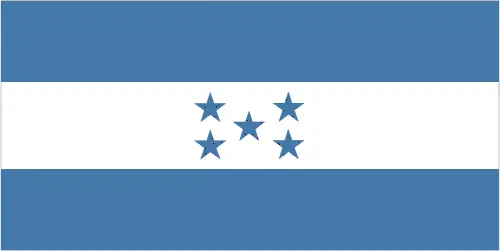 Honduras — Key Facts Honduras — Key Facts |
|
|---|---|
| Capital | Tegucigalpa |
| Largest City | San Pedro Sula (commercial hub) |
| Driving Side | RIGHT |
| Vehicle Position | Left-Hand Drive (LHD) |
| Speed — Highway | 100 km/h |
| Speed — National | 80 km/h |
| Speed — Urban | 40 km/h |
| Speed — School Zone | 25 km/h |
| BAC Limit | 0.07% |
| Emergency — Police | 911 |
| Emergency — Ambulance | 911 |
| Tolls | YES — CA-5; ~HNL 15–40/booth; cash HNL/USD |
| Currency | Honduran Lempira (HNL); 1 USD ≈ 24–25 HNL |
| IDP | Recommended |
| Visitor Permit | Not required (home licence valid) |
| Border Crossings | Guatemala, El Salvador, Nicaragua (6 crossings) |
Honduras, Central America’s second-largest country by area, stretches from the Caribbean coast in the north to the Pacific shores in the south, with a diverse landscape that includes tropical lowlands, rugged mountain ranges, and island territories. For visitors driving through Honduras, the experience ranges from modern toll highways connecting major cities to narrow mountain passes leading to archaeological treasures and world-class diving destinations. The main economic corridor—the CA-5 highway connecting the capital Tegucigalpa to the industrial city of San Pedro Sula—is a tolled route that forms the backbone of Honduras’s highway infrastructure, while the Inter-American Highway (CA-1) provides crucial east-west connectivity. Whether you’re planning a route through Central America, heading to the Bay Islands for Caribbean diving on the Mesoamerican Barrier Reef, or navigating mountain roads to the UNESCO World Heritage Site of Copán Ruinas, understanding Honduras’s road rules, toll systems, and driving conditions is essential for a safe and enjoyable journey.
Honduras presents unique driving challenges and opportunities. The country’s road network, while improved significantly in recent years, still features variable conditions—paved main highways in good repair contrast sharply with rural mountain roads that may be unpaved or damaged. Security considerations require daytime driving and careful route planning, particularly on remote stretches. The BAC limit of 0.07% is among the strictest in the Americas, and police checkpoints are ubiquitous on main highways. Major attractions accessible by car include the archaeological wonders of Copán, the Caribbean diving mecca of Roatán in the Bay Islands, and the scenic North Coast with its protected beaches and tropical rivers. This comprehensive guide covers Honduras’s road infrastructure, speed limits, toll systems, driving regulations, fuel availability, city-specific driving conditions, and practical tips to help international visitors navigate this fascinating and historically significant Central American nation safely and confidently.
Road Network and Infrastructure
Honduras’s road network spans approximately 14,500 kilometers and forms the crucial connectivity backbone for this second-largest Central American nation. The backbone of Honduras’s highway system consists of several major routes. The CA-1 Inter-American Highway runs east-west, connecting Guatemala in the west through Copán Ruinas and eventually reaching Nicaragua in the east. The CA-5, the most economically important route, runs north-south from the capital Tegucigalpa through the Honduran highlands to the industrial hub of San Pedro Sula over a distance of 242 kilometers, serving as the primary economic corridor and the main tolled highway route. The CA-4 connects northward toward Guatemala and El Salvador borders, while the CA-6 leads eastward toward Nicaragua. The North Coast Highway (CA-13) runs along the Caribbean coast from San Pedro Sula through Omoa and Tela to the tropical city of La Ceiba, providing access to the gateway for Bay Islands ferries and the Mesoamerican Barrier Reef.
Main highways connecting major cities—particularly the CA-1, CA-5, and CA-13—are generally paved and reasonably maintained, reflecting investments by the Secretaría de Obras Públicas, Transporte e Infraestructura (SOPTRAVI), the national road authority. These routes feature modern specifications with adequate lane markings and regular maintenance cycles. Secondary routes (B-roads) connecting smaller towns to the highway network are typically paved as well, though quality varies by region and season. Rural roads in the highlands and interior mountains can be unpaved, damaged, or poorly maintained, particularly in the Mosquito Coast (La Mosquitia) region and the western highlands near Copán. These rural sections often feature significant elevation changes, narrow widths, and surface conditions that deteriorate during rainy season (May–November). Recent administrations have undertaken significant road improvement programs, including repaving of sections of the CA-5 and expansion of the North Coast Highway, though funding and infrastructure improvements remain ongoing priorities.
Safety infrastructure on main highways includes marked lanes, guard rails on dangerous curves, and designated rest areas at intervals. However, rural mountain roads often lack modern safety features. Street lighting in urban areas is adequate in commercial districts but sparse in residential neighborhoods. Traffic lights are present at major intersections in Tegucigalpa and San Pedro Sula. Speed humps (locally called “lomos” or “topes”) are universal features on all town and village approaches throughout Honduras—drivers should reduce speed significantly when approaching populated areas. The SOPTRAVI oversees highway maintenance and planning, while Municipal Police (Policía Municipal) and the traffic division of the National Police (Dirección Nacional de Vialidad – DNVT) enforce traffic regulations. Security checkpoints operated by the police are extremely common on main highways, particularly on the CA-5 and CA-1; drivers should expect to be stopped multiple times on a long-distance journey and should have all vehicle documents and identification readily available.
Speed Limits
Honduras enforces a tiered speed limit system designed to protect road users in different environments. The following speed limits apply throughout the country:
| Road Type | Speed Limit | Notes |
|---|---|---|
| Highway (Autopista/Carretera Principal) | 100 km/h (62 mph) | CA-1, CA-5, CA-13 main routes |
| National Road (Carretera Nacional) | 80 km/h (50 mph) | Secondary highways and regional routes |
| Urban Area (Zona Urbana) | 40 km/h (25 mph) | Towns, cities, populated areas |
| School Zone (Zona Escolar) | 25 km/h (16 mph) | Near schools, especially morning/afternoon hours |
Speed enforcement is carried out by the Dirección Nacional de Vialidad (DNVT), a division of the National Police, and by Municipal Police in urban areas. Police officers conduct speed enforcement through mobile radar units stationed on main highways, particularly on the CA-5 and CA-1 corridors. However, enforcement is inconsistent, and officers may not always use radar; many police simply observe vehicles and flag drivers they believe are speeding. Speed limit violations can result in fines ranging from 500 to 2,000 HNL (approximately US$20–80). Paying fines immediately to the officer (“mordida” or informal payment) is sometimes expected in rural areas, though this is technically illegal—insist on a written citation if you wish to dispute.
Speed humps (“topes” or “lomos”) are the most visible and effective speed control measure in Honduras. These raised barriers, sometimes reaching 15 centimeters in height, are installed on approaches to every town and village, often without advance warning. They vary significantly in size and visibility; some are painted bright yellow or white, while others are unmarked. Hitting a speed hump at highway speed can cause serious suspension damage or loss of vehicle control. Drivers should reduce speed substantially and approach cautiously when entering any populated area. Many rural roads feature multiple speed humps in succession. Night driving complicates speed hump navigation because visibility is poor; this is another reason to avoid driving after dark.
Toll Roads
Honduras operates a toll road system on its most important economic corridor, the CA-5 highway, which connects the capital Tegucigalpa with the commercial hub of San Pedro Sula. This 242-kilometer route is the most significant tolled highway in the country and is operated under concession arrangements. The CA-5 toll highway features four to five toll booths spaced along the route, with toll charges varying by location and vehicle classification. For a standard passenger vehicle, tolls at each booth range from approximately 15 to 40 Honduran Lempira (HNL), equivalent to about US$0.60 to US$1.60 at 2026 exchange rates. The total toll cost for traversing the entire Tegucigalpa-to-San Pedro Sula route is typically 100–150 HNL (approximately US$4–6) depending on current rates and the exact number of booths passed.
Toll plazas operate 24 hours daily and accept both Honduran Lempira (HNL) cash and US dollars (USD). Drivers approaching a toll booth should slow to approximately 20–30 km/h and position their vehicle in the appropriate lane. Payment lanes are typically marked as “Efectivo” (cash) or “Tarjeta” (card). Most tolled plazas now accept credit/debit card payment in addition to cash, though this is less common at smaller booths. After paying, drivers receive a toll receipt; while not required for exit, it’s advisable to keep this in case of billing disputes if paying by card. The toll infrastructure on the CA-5 has improved significantly in recent years with modern electronic toll collection systems being gradually introduced at major plazas.
Beyond the main CA-5 corridor, the Honduras toll system includes bridge tolls at crossings such as the Río Ulúa near San Pedro Sula and other major river crossings, typically charged at 10–20 HNL per crossing. The Valle de Ángeles area outside Tegucigalpa has specific toll arrangements. International travelers should understand that toll roads are a normal and expected cost of highway travel in Honduras; toll costs should be factored into overall travel budgets. The CA-5 toll highway is significantly safer and faster than the alternate mountain routes between Tegucigalpa and San Pedro Sula (such as the older, winding CA-6), reducing journey time from more than four hours to approximately three hours, making the toll investment worthwhile for most travelers.
Future toll road expansion is under consideration, including potential new toll corridors to improve connectivity in other regions. Current plans discussed by the government may include toll-financed projects on secondary routes, though implementation timelines remain uncertain. Travelers should verify current toll rates and routes through local car rental agencies or the SOPTRAVI before undertaking long-distance highway journeys, as rates are periodically adjusted. Electronic toll systems may eventually eliminate cash-only lanes entirely, so having access to credit card payment options is increasingly advisable.
Road Rules and Traffic Regulations
Honduras operates a comprehensive system of traffic laws and driving regulations designed to ensure road safety. The country drives on the RIGHT side of the road, with vehicles configured as LEFT-HAND DRIVE (LHD), the standard for North America and continental Europe. This is the same driving position as in the United States, Guatemala, El Salvador, and Nicaragua, so visitors from these countries will find Honduras familiar. However, visitors from left-driving countries (UK, Jamaica, Bahamas, etc.) will need to make a significant adjustment and should allow time to familiarize themselves with right-side driving.
The blood alcohol concentration (BAC) limit in Honduras is strictly 0.07% (70 mg/100 ml), which is lower than many North American jurisdictions (typically 0.08% in the USA and Canada). This means Honduras has less tolerance for drunk driving than many neighboring countries. Testing for impaired driving is conducted through breathalyzer tests administered by police at checkpoints or after traffic stops. Drivers refusing breath testing face immediate arrest and license suspension. Penalties for exceeding the BAC limit include fines of 5,000–10,000 HNL (US$200–400), license suspension of 30 days to three months, and potential vehicle impoundment. Police take alcohol-impaired driving extremely seriously, and enforcement has increased significantly in recent years.
Mandatory safety requirements for all vehicles include seatbelts for all occupants (front and rear passengers), which must be worn at all times while the vehicle is in motion. Failure to wear a seatbelt results in fines of 500–1,000 HNL (US$20–40). Children must be restrained in appropriate child seats, though enforcement of child restraint laws is less rigorous than seatbelt enforcement. Mobile phone use while driving is strictly prohibited except for hands-free operation, with fines of 300–800 HNL (US$12–32) for violations. Headlights must be illuminated at night on all routes and are required in low-visibility conditions (rain, fog) even during daytime.
A reflective safety vest is required to be worn by drivers who exit their vehicle on the roadway; this is particularly important at accident scenes or when making roadside repairs. A vehicle first aid kit is legally required equipment in all automobiles. Many police traffic stops focus on verifying these safety items in addition to license and vehicle documentation. Police checkpoints are extremely common throughout Honduras, particularly on the CA-5, CA-1, and roads near major cities. At checkpoints, drivers should expect to provide: (1) driver’s license, (2) vehicle registration/title, (3) proof of liability insurance, and (4) proof of payment of annual vehicle tax. Cooperation with police at checkpoints is essential; officers typically take 10–15 minutes to verify documents and may ask about the purpose of travel.
Road rules follow standard right-of-way principles. At four-way intersections without traffic lights, drivers must yield to vehicles approaching from the right. At roundabouts, traffic in the circle has priority over entering traffic (same as in the USA and Central America, opposite to the UK rule). U-turns are prohibited in urban areas and on main highways unless specifically marked as permitted. Right turns on red lights are legal after a complete stop unless a sign prohibits the maneuver. Overtaking is permitted on highways where white center lines mark passing zones; double yellow lines prohibit passing.
Livestock and domestic animals frequently cross or rest on rural roads throughout Honduras, particularly in mountainous regions and on secondary routes. Cattle, horses, pigs, and chickens may be on the roadway without warning, especially on roads through agricultural areas. Drivers should reduce speed in rural areas and be prepared to stop suddenly for animals. Collisions with cattle can cause serious damage to vehicles and injury to occupants. Night driving dramatically increases the risk of animal collisions because animals are difficult to see until very close range.
Defensive driving practices are strongly recommended, particularly avoiding travel after dark on any route outside major cities. Waze and Google Maps both function well in Honduras and provide route guidance, real-time traffic information, and police location warnings. Many rural areas lack reliable cellular coverage, so offline maps are advisable. Drive defensively around minibuses and large trucks, which dominate Honduras’s transportation system and may overtake aggressively or travel at speeds inconsistent with road conditions.
Fuel and Petrol Stations
Fuel in Honduras is measured in liters and priced in Honduran Lempira (HNL). Major fuel brands operating in Honduras include UNO/ESSO (ExxonMobil), Shell, Texaco, and PUMA, along with smaller independent stations. Fuel is categorized as Regular (87 octane), Premium (95 octane), and Diesel (for diesel-engine vehicles), with prices varying daily based on international crude oil prices and local distribution costs. As of early 2026, approximate fuel prices are: Regular gasoline approximately 90–105 HNL per liter (equivalent to US$3.60–4.20); Premium approximately 100–115 HNL per liter (US$4.00–4.60); Diesel approximately 75–85 HNL per liter (US$3.00–3.40). These prices are subject to change and may fluctuate weekly based on global fuel market conditions.
Fuel stations are reasonably well distributed along major highways (CA-1, CA-5, CA-13) with stations typically located every 30–50 kilometers in well-traveled corridors. Major branded stations (Shell, ESSO, Texaco) are found in or near all significant cities and towns. In less developed regions—particularly the Mosquito Coast (La Mosquitia), remote highland areas, and the western border region near Copán—fuel stations become much less frequent. Fuel availability in rural areas can be limited or inconsistent, and prices at remote stations may be higher than in urban centers.
Fuel stations accept payment in multiple forms: Honduran Lempira (HNL) cash is universal; US dollars (USD) are accepted at most major branded stations, particularly in tourist areas and near international borders; credit/debit cards are increasingly accepted at major branded stations in cities and towns, though smaller or remote stations may be cash-only. Drivers are strongly advised to keep fuel tanks above the halfway level when traveling through rural areas, as finding fuel stations can be unpredictable on remote routes. Fuel receipts sometimes are required by rental car agencies, police, or immigration officials; drivers should keep receipts throughout their journey.
Fuel quality at branded stations (Shell, ESSO, Texaco) is reliable and comparable to international standards. Independent or unbranded stations may occasionally sell lower-quality fuel; this is a particular concern in remote areas where fuel may have been stored longer or contaminated. Filling up at well-known branded stations is advisable, especially for rental vehicles or unfamiliar cars. Fuel economy may be affected by Honduras’s mountainous terrain, particularly on the CA-5 between Tegucigalpa and San Pedro Sula, which includes substantial elevation changes. A typical sedan should achieve 7–9 liters per 100 kilometers on highway driving; smaller, more fuel-efficient vehicles may achieve 5–7 liters per 100 kilometers.
Driving in Tegucigalpa
Tegucigalpa, Honduras’s capital city with a metropolitan population of approximately 1.4 million, is the political and administrative center of the country and a destination for many international visitors. The city presents unique driving challenges due to its geography, traffic patterns, and safety considerations. Tegucigalpa is built within a narrow mountain valley with steep topography; elevation changes throughout the city create challenging gradients and winding streets. The urban area is characterized by hilly terrain, narrow residential streets, and complex one-way traffic patterns in the downtown area. Avenida República de Chile and Bulevar Morazán are the main commercial arteries, with Bulevar Morazán being the primary business district artery that connects to major destinations.
Traffic congestion in Tegucigalpa is significant during rush hours (approximately 7–9 AM and 5–7 PM), with severe bottlenecks at major intersections and on the approaches to the city. The city lacks comprehensive public transportation coordination; minibuses (called “busetas” or “ruteras”), private vehicles, motorcycles, and motorcyclists dominate the roads. These minibuses often stop abruptly to pick up or discharge passengers without signaling and may make dangerous turns. Motorcycle and motorcycle-taxi (“moto-taxi”) traffic is heavy and unpredictable; these vehicles frequently weave between cars and ignore traffic signals. Defensive driving and constant vigilance are essential.
Toncontín International Airport (TGU), located about 6 kilometers from downtown Tegucigalpa, is famous for being one of the world’s most challenging airport approaches. The runway is short and situated on a plateau surrounded by steep mountains; the final approach involves a sharp turn at low altitude over the city, which can be unnerving for passengers and demanding for pilots. Ground transportation from the airport involves navigating through city traffic to reach your hotel or car rental facility. Car rental agencies at Toncontín have limited inventory; reserving in advance is strongly recommended.
Parking in Tegucigalpa requires caution. Safe parking options are limited to hotels with secure parking facilities, shopping centers with attended parking lots, or municipal parking garages in the commercial district. Street parking is not recommended, particularly at night or in residential neighborhoods, due to theft risk. Vehicle break-ins targeting rental cars are not uncommon; travelers should never leave valuables visible in parked vehicles and should use secure, attended parking whenever possible. Many hotels provide complimentary secure parking for guests.
Waze is highly recommended for navigation in Tegucigalpa, as the city’s complex street layout and one-way systems can be confusing without GPS guidance. Waze provides real-time traffic information and can route around congestion. Google Maps also functions well. Offline maps should be downloaded before arrival, as cellular coverage can be intermittent in some areas. Avoid driving through Tegucigalpa at night unless absolutely necessary; after dark, travel by taxi or ride-hailing services rather than driving.
A popular side trip from Tegucigalpa is Valle de Ángeles (Valley of Angels), a charming town approximately 22 kilometers away via the CA-6 highway, located at 800 meters elevation in the mountains. This artisanal crafts center features colonial architecture, artist studios, and restaurants, making it a pleasant day trip. The drive to Valle de Ángeles is scenic and the road is paved and reasonably maintained, though roads are curvy and hilly. The town itself is compact and walkable, with pedestrian-friendly streets in the historic center.
San Pedro Sula: Second City and Commercial Hub
San Pedro Sula, with a metropolitan population of approximately 900,000, is Honduras’s largest city by some measures and the primary commercial and industrial center of the country. Located in the flat to gently rolling terrain of the Valle de Sula (Sula Valley), an agricultural plain in northern Honduras, San Pedro Sula is Honduras’s economic powerhouse, with significant banana and palm oil processing industries, as well as manufacturing and import/export operations. For international travelers, San Pedro Sula is often the entry point into Honduras, as Ramón Villeda Morales International Airport (SAP) serves as Honduras’s primary international airport with the largest number of international flight connections.
The Ramón Villeda Morales International Airport (SAP) is located approximately 13 kilometers north of San Pedro Sula city center, making it relatively accessible compared to Tegucigalpa’s challenging Toncontín airport. The drive from SAP to downtown San Pedro Sula or to hotels takes approximately 15–30 minutes depending on traffic. The airport has good ground transportation facilities, including car rental agencies (Hertz, Avis, Budget, National, and local companies), taxi services, and shuttle buses. The road from the airport to the city center is modern and well-maintained, with clear signage.
San Pedro Sula city driving is less complicated than Tegucigalpa, though still requires caution and attention. The urban area is organized on a grid pattern in the central business district, with Bulevar del Norte and Circunvalación (ring road) being major traffic arteries. The Circunvalación connects the city’s outer areas and provides bypass routes around the congested central district. Traffic is generally manageable outside of rush hours (7–9 AM and 5–7 PM), though the road infrastructure is regularly strained. Minibuses, motorcycles, and taxis dominate traffic; many drivers are aggressive and ignore traffic signals.
San Pedro Sula is a major gateway to Honduras’s Caribbean coast and northern beach regions. The North Coast Highway (CA-13) runs east from San Pedro Sula through several important coastal towns: Puerto Cortés (15 km, Honduras’s largest port), Omoa (45 km, featuring a colonial fortress), Tela (120 km, known for protected beaches and Lancetilla Botanical Garden), and La Ceiba (185 km, the carnival capital of Honduras and the main gateway to the Bay Islands). This coastal drive is scenic and the CA-13 is generally well-maintained, though conditions deteriorate during the rainy season (May–November) when flooding can close sections of the road near river crossings.
Secure parking is necessary in San Pedro Sula, particularly at night. Hotels with secure parking are advisable, and vehicles should never be left unattended on streets with valuables visible. Car break-ins and theft are concerns, particularly in the downtown area and residential neighborhoods. Shopping centers (Centro Comercial) have attended parking facilities where vehicles are safe. Some travelers report that San Pedro Sula has fewer serious crime issues than Tegucigalpa in the daytime, though vigilance is still essential. After dark, use taxi or ride-hailing services rather than driving.
Copán Ruinas and the Bay Islands
Copán Ruinas is one of the most significant archaeological sites of the ancient Maya civilization, designated as a UNESCO World Heritage Site, and one of Honduras’s premier tourist destinations. The site is located in the western highlands of Honduras, approximately 170 kilometers from Guatemala City, making it accessible from both Honduras and Guatemala. For those driving to Copán Ruinas from within Honduras, the primary route is CA-11, which runs westward from San Pedro Sula through the hilly terrain toward the town of Copán Ruinas, a distance of approximately 220 kilometers. The drive from San Pedro Sula to Copán Ruinas takes approximately 4–5 hours. The highway is paved through most of the route, though sections near the town of Copán and the final approach to the archaeological site become unpaved and rough; high-clearance vehicles are recommended for the final approach.
Alternatively, visitors can enter Honduras at the Guatemala border crossing at El Florido, which is located near Copán Ruinas. The Copán town itself is a small colonial settlement with excellent tourist infrastructure, including hotels, restaurants, and tour guides. The archaeological site features the famous “Acropolis” with the longest known Maya hieroglyphic staircase, elaborate stelae and altars, and a sophisticated understanding of Maya culture and astronomy. Entry to Copán costs approximately US$15–20 for international visitors. The site requires a guide (mandatory), and tours typically last 2–3 hours. The town of Copán Ruinas can be visited as a day trip from larger cities or as a multi-day stay for more leisurely exploration. The town itself is charming and walkable, with a central plaza, craft shops, and restaurants.
The Bay Islands (Islas de la Bahía)—Roatán, Utila, and Guanaja—form Honduras’s Caribbean island territory and are world-famous diving destinations. Diving on the Mesoamerican Barrier Reef, the second-largest coral reef system globally, offers exceptional opportunities to encounter tropical fish, rays, sea turtles, and coral formations. Roatán Island is the largest of the three, with the most developed tourist infrastructure, including resort hotels, dive shops, restaurants, and beaches. Utila Island is famous as a budget-friendly diving destination and hosts numerous dive schools offering certifications. Guanaja is more remote and less developed.
Accessing the Bay Islands by car is not possible, as they are separated from the mainland by approximately 50 kilometers of Caribbean Sea. However, driving to the ferry departure point is necessary. The primary ferry routes are: (1) From La Ceiba (on the mainland Caribbean coast) to Roatán via ferry services operated by Galaxy Wave and Roatán Ferry, approximately 1 hour of sea travel, multiple daily departures; (2) From San Pedro Sula or nearby areas, it’s approximately 200 kilometers and 2.5–3 hours’ driving to reach La Ceiba via the CA-13 North Coast Highway. The drive to La Ceiba passes through tropical lowlands and coastal areas. Once in La Ceiba, vehicles can be parked at the ferry terminal or at nearby hotels; international travelers typically do not take rental cars onto the ferries, as island roads are narrow and limited.
Alternatively, flying to the Bay Islands is quicker: From Tegucigalpa (TGU airport), flights to Roatán (RTB airport) take approximately 45 minutes; from San Pedro Sula (SAP), flights take approximately 30 minutes. Multiple daily flights operate to Roatán during high season. For those choosing to drive and ferry, the experience is adventurous and allows for scenic coastal driving. Ferry schedules should be checked in advance, as departures may be limited or canceled during rough seas (common in hurricane season, June–November).
The North Coast: Caribbean Drive
Honduras’s Caribbean coast stretches for approximately 500 kilometers along the northern boundary of the country, featuring tropical beaches, colonial ports, protected marine reserves, and gateway communities to the Bay Islands. The North Coast Highway (CA-13) is the primary route for exploring this region, running east from San Pedro Sula through several important towns and finally terminating near the Río Patuca on the border of La Mosquitia wilderness.
Starting from San Pedro Sula and heading east along CA-13, the first significant town encountered is Puerto Cortés (15 kilometers), which is Honduras’s largest Caribbean port and a major commercial hub for banana and palm oil export. Puerto Cortés is primarily industrial and of limited tourist interest, though the port itself is historically significant in Central American trade.
Continuing east, the next destination is Omoa (45 kilometers from San Pedro Sula), a historic coastal town featuring Fortress San Fernando de Omoa, a 18th-century Spanish colonial fortress originally built to protect against pirate attacks. The fortress is remarkably well-preserved and now functions as a museum open to visitors. The town has maintained its colonial charm and serves as a base for beach visitors and divers. The Omoa town is compact and walkable.
Further east lies Tela (120 kilometers from San Pedro Sula), a beach town with protected marine sanctuaries, including the Laguna de Tela and numerous beaches. Tela features the Lancetilla Botanical Garden, one of the Western Hemisphere’s largest tropical botanical gardens, with thousands of species of plants and a network of trails through tropical forest. The town has tourist infrastructure including hotels and restaurants, and the beaches are suitable for swimming and relaxation. Tela is approximately 2 hours’ drive from San Pedro Sula via CA-13.
The coastal drive continues to La Ceiba (185 kilometers from San Pedro Sula, approximately 2.5–3 hours), Honduras’s major Caribbean city and tourism hub. La Ceiba is famous as “The Carnival Capital of Honduras,” hosting an elaborate week-long carnival celebration each May featuring parades, music, and cultural events. The city is the primary departure point for ferries to Roatán and other Bay Islands. La Ceiba has excellent tourist facilities, including beachfront resort hotels, international restaurants, and diving operations. The city is also a gateway to Pico Bonito National Park, located approximately 40 kilometers west of La Ceiba, featuring rainforest ecosystems, hiking trails, and river activities.
The CA-13 highway along the north coast is generally paved and reasonably well-maintained through major towns, though sections can suffer deterioration during the rainy season (May–November) when flooding near river crossings can briefly close the road. Travel during rainy season should account for potential delays. The coastal landscape transitions from industrial zones near ports to tropical vegetation and beaches as you travel inland. The climate is tropical, hot, and humid year-round, with tropical downpours common during afternoon hours in rainy season. The entire coastal drive from San Pedro Sula to La Ceiba totals approximately 185 kilometers and 2.5–3 hours of driving time, making it a pleasant day trip with frequent photo and rest opportunities at interesting towns along the route.
Practical Driving Tips
Before traveling to Honduras, international visitors should consult the most current travel advisories issued by their home government, as security situations can change. Check advisories from your country’s foreign ministry or equivalent organization for up-to-date information on security conditions, health risks, and travel recommendations. Most major routes in Honduras are reasonably safe during daytime, but caution is warranted in certain urban areas and rural regions.
Daytime driving is strongly recommended throughout Honduras. Travel after dark is inadvisable except in major cities where you are confident in your route. Night driving increases vulnerability to security risks, decreases visibility for obstacles (including speed humps, animals, and potholes), and makes it difficult to find assistance if you experience a breakdown. If you must travel at night, plan to stay on main highways (CA-1, CA-5, CA-13) and avoid secondary or rural roads entirely. Many travelers choose to stay overnight at an intermediate location rather than drive at night. Do not stop for strangers on isolated roads, even if they appear to be in distress; this is a known setup for robbery. If you witness an accident, do not stop unless you are certain it is safe to do so.
Secure parking is essential in Honduras. Never leave your vehicle unattended on the street, particularly in urban areas or at night. Use hotel parking facilities, which are typically secure and often complimentary for guests. In smaller towns, ask locals or hotel staff for recommendations for safe parking. Many establishments have guarded parking lots. Shopping centers typically have attended parking where staff monitor vehicles for a small fee (typically 10–20 HNL). When parking, remove all valuables from the vehicle and lock all doors and windows. Even in daylight, do not leave cameras, laptops, phones, or other electronics visible on seats or dashboards.
Carry only necessary cash for daily expenses; leave valuables in the hotel safe. Honduras’s currency is the Honduran Lempira (HNL), and exchange rates fluctuate; as of early 2026, approximately 24–25 HNL equals one US dollar. ATMs are widely available in all cities and towns, and credit cards are accepted at hotels, restaurants, and shops in urban areas. However, rural areas are often cash-only. US dollars (USD) are widely accepted at hotels, restaurants, and shops, particularly in tourist areas, though locals typically prefer Honduran Lempira for change. Bring both HNL and USD for flexibility.
Police checkpoints are ubiquitous on main highways throughout Honduras, particularly on CA-5 and CA-1. Expect to be stopped multiple times during long-distance driving. When approaching a police checkpoint, slow to a safe speed and stop as directed. Police will ask for your driver’s license, vehicle registration, proof of insurance, and proof of payment of the annual vehicle tax (which is included in registration). Keep all documents organized and readily accessible. Be cooperative and respectful; officers are conducting routine traffic enforcement. In most cases, police simply verify documentation and allow you to proceed. If you are cited for a violation, you can request a written citation (instead of paying “on the spot”) to dispute it later. However, in rural areas, informal payments to officers are sometimes expected, which is technically a bribe and is illegal. Use your best judgment; if you believe the charge is unfair and cannot appeal it, paying and moving on may be the pragmatic choice.
The CA-5 toll highway between Tegucigalpa and San Pedro Sula, while requiring toll payment, is significantly safer and faster than alternate mountain routes, offers better road conditions, and has greater police presence. The toll investment is worthwhile from both a time-savings and safety perspective. Alternative mountain routes between these cities exist but are winding, slower, and more isolated; avoid these unless necessary.
Waze and Google Maps both function well in Honduras and are essential tools for navigation. Waze provides real-time traffic conditions, police location reports from other users, and optimal routing. Google Maps offers similar functionality. Download offline maps of your intended regions before travel, as cellular coverage may be intermittent in remote areas. A local SIM card from Tigo or Claro (the major mobile providers) allows you to access data for navigation; purchase a SIM card at the airport or a local phone store and activate a data plan for the duration of your stay.
Vehicle breakdowns should be handled by calling 911 (Police/Ambulance) or contacting your car rental company’s roadside assistance line (information provided in your rental documentation). Rental cars typically include roadside assistance coverage. Do not attempt to repair vehicles on the roadside without assistance, particularly in rural areas. If you rent a car, ensure you understand the company’s breakdown procedures before departing the rental facility. Have contact information for your rental company readily available. Rooftop luggage racks and roof-mounted equipment attract attention and may increase security risks; travel with luggage in the vehicle trunk if possible.
Travel insurance with medical evacuation coverage is strongly recommended for Honduras, as high-quality medical facilities are concentrated in Tegucigalpa and San Pedro Sula. Medical facilities in rural areas are limited, and serious injuries may require evacuation to larger cities or international medical centers. Comprehensive travel insurance ensures access to quality care and covers evacuation costs, which can be substantial.
Vehicle documentation should always be carried while driving: your driver’s license, vehicle registration/title, proof of liability insurance, and proof of payment of annual vehicle tax. If you are driving a rental car, carry the rental agreement and contact information for the rental company. Having these documents organized and readily accessible significantly speeds up police checkpoints and helps resolve any traffic issues quickly.
FAQ: Driving in Honduras
What is Honduras’ drink-driving limit?
Honduras has a strict blood alcohol concentration (BAC) limit of 0.07% (70 mg/100 ml), which is lower than many North American jurisdictions. This means Honduras is less tolerant of drunk driving than the USA (typically 0.08%) or Canada (0.08%). Drivers found exceeding this limit face significant penalties including fines of 5,000–10,000 HNL (US$200–400), license suspension, and potential vehicle impoundment. Police conduct breath testing at checkpoints and after traffic stops, and refusing testing results in immediate arrest. The safest approach is to avoid any alcohol consumption before driving.
Are there toll roads in Honduras?
Yes, Honduras operates toll roads primarily on the CA-5 highway connecting Tegucigalpa to San Pedro Sula. This 242-kilometer route features four to five toll booths with charges ranging from 15–40 HNL (approximately US$0.60–1.60) per booth, totaling 100–150 HNL (approximately US$4–6) for the entire route. Tolls accept both Honduran Lempira (HNL) cash and US dollars (USD). Additional bridge tolls exist at major river crossings (Río Ulúa and others) at approximately 10–20 HNL per crossing. The toll system is operational 24/7, and the toll investment is justified by faster travel times and improved road safety compared to alternate mountain routes.
How do I drive to Copán Ruinas from Guatemala?
Copán Ruinas is accessible via the El Florido border crossing located directly adjacent to the archaeological site. From Guatemala City, the drive to El Florido is approximately 170 kilometers via Guatemala’s CA-13 highway toward the Honduran border. Upon crossing at El Florido, the highway transitions to Honduras’s CA-11, and Copán Ruinas is very close to the border crossing. Alternative routes include entering Honduras at other border crossings (Agua Caliente or Corinto near Omoa) and driving to Copán via secondary roads, though these routes are less direct. The El Florido route is most efficient for reaching Copán Ruinas quickly from Guatemala.
Can I drive to Roatán Bay Islands by car?
No, Roatán Island cannot be reached by car due to its location approximately 50 kilometers offshore in the Caribbean Sea. However, you can drive to the ferry departure point at La Ceiba (located 200 kilometers east of San Pedro Sula via CA-13, approximately 2.5–3 hours’ driving) and then take a ferry to Roatán. Ferry services operate multiple times daily from La Ceiba to Roatán (approximately 1 hour of sea travel) via companies like Galaxy Wave and Roatán Ferry. Vehicles are typically left at La Ceiba or at the airport; rental cars are not transported on the ferries. Alternatively, flying from San Pedro Sula (SAP) or Tegucigalpa (TGU) to Roatán (RTB airport) takes 30–45 minutes and is often faster and more convenient than driving and ferrying.
What is the best route between Tegucigalpa and San Pedro Sula?
The best route between Honduras’s two largest cities is the CA-5 toll highway, which covers 242 kilometers in approximately 3 hours. The CA-5 is a modern, well-maintained highway with toll plazas (total cost approximately 100–150 HNL or US$4–6) but offers superior road conditions, speed efficiency, and greater police presence (which improves security). Alternative mountain routes exist (such as the older CA-6) but are winding, slower (4+ hours), and more isolated. The CA-5 toll investment is justified by time savings and safety benefits. The drive passes through scenic highland terrain and is the primary economic corridor connecting Honduras’s two major cities.
What documents do I need to drive in Honduras?
International visitors need the following documents to drive in Honduras: (1) valid driver’s license from your home country (in Spanish translation or an International Driving Permit (IDP) is recommended but not always required), (2) vehicle registration/title and proof of ownership, (3) proof of third-party liability insurance (mandatory and verified at police checkpoints), and (4) proof of payment of the annual vehicle tax (included with registration). If renting a car, carry the rental agreement and rental company contact information. Keep all documents organized and readily accessible for police checkpoints, which are frequent on main highways. An International Driving Permit, while not strictly required, is recommended as a backup form of identification and may facilitate police interactions.
Sources and References
- Secretaría de Obras Públicas, Transporte e Infraestructura (SOPTRAVI) — Honduras Road Authority official information
- Dirección Nacional de Vialidad (DNVT) — National Police Traffic Division, Honduras
- Instituto Hondureño de Turismo (IHT) — Official Tourism Board
- US State Department Travel Advisory for Honduras
- World Health Organization (WHO) health travel guidelines
- Copán Ruinas UNESCO World Heritage Site official documentation
- Bay Islands Tourism Association (Roatán, Utila, Guanaja)
- Mesoamerican Barrier Reef Tourism Alliance
- TransJamaican Highway (toll road operator documentation)
- Google Maps and Waze navigation platform data for Honduras
- International Driving Permit (IDP) — 1968 Vienna Convention information
- Honduran Motor Vehicle Code (Código de Tránsito) regulations