
Driving Directions and Google Map of Liechtenstein — Rhine Valley, Alpine Roads, Swiss Vignette & Road Guide
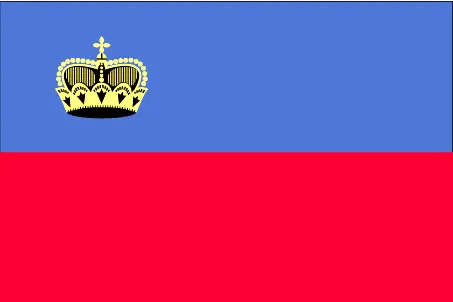
Liechtenstein — the world’s sixth-smallest country by area at just 160 km², doubly landlocked between Switzerland and Austria — is one of Europe’s most remarkable and least-expected driving destinations. Despite its tiny dimensions (approximately 25 km from north to south and just 6–12 km wide), this Alpine principality offers a journey of exceptional scenic variety: the broad flat floor of the Rhine Valley running along its western frontier, charming historic villages ascending the slopes, and the dramatic Rätikon mountain range rising to over 2,500 m to the east. The principality of Liechtenstein is not an EU member but has been a full Schengen Area member since December 2011 and belongs to the European Economic Area (EEA). It forms a customs and monetary union with Switzerland, using the Swiss Franc (CHF) as its currency and sharing Switzerland’s open border. This means that crossing between Liechtenstein and Switzerland is seamless — there are no passport or customs controls — while the border with Austria involves standard Schengen passport checks (though as all parties are Schengen members, these are minimal).
For drivers, Liechtenstein is unique in that it has no motorways of its own — the principality is too small to warrant them — and no road vignette is required for roads within Liechtenstein. However, if you approach via Switzerland (as most visitors do), a Swiss motorway vignette (Autobahnvignette) is required for Swiss motorway use, and if approaching via Austria via the A14 Rheintal Autobahn, an Austrian vignette is required on the Austrian motorway sections. Understanding these adjacent-country requirements is essential for a smooth journey. This guide covers everything you need for driving in and through Liechtenstein: the Google Map below, road network and routes, speed limits, vignette rules, the BAC limit, essential Alpine driving advice, cross-border information, and the best scenic drives — including the celebrated Rhine Valley road and the mountain ascent to Malbun ski resort. Use the free driving directions tool on our homepage to plan your route to and through Liechtenstein.
Geography & Road Network
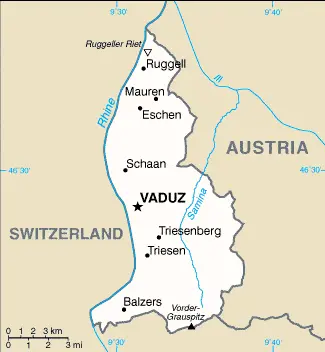
Liechtenstein is divided geographically into two distinct zones: the flat Rhine Valley lowlands (Unterland) in the north and west — at about 450–500 m altitude — and the rugged Alpine uplands (Oberland) to the south and east, rising steeply to the Rätikon peaks of 2,000–2,599 m. This topography entirely shapes the road network: most roads run either along the valley floor or climb sharply up the mountain slopes.
The Main Road Network
Liechtenstein’s road network totals approximately 380 km of paved roads, managed by the Tiefbauamt (Office for Civil Engineering). There are no motorways or dual-carriageway roads within the principality. The road network is classified into national roads (Landesstrassen) and municipal roads (Gemeindestrassen). The key national roads are:
- L2 — Rhine Valley Road (Rheintalstrasse): The backbone of Liechtenstein, running approximately 25 km north to south along the floor of the Rhine Valley, connecting Ruggell in the north through Schaan, Vaduz (the capital), Triesen, and Balzers to the Swiss border at the south. This is the principal artery for transit traffic and for reaching most of Liechtenstein’s villages. The L2 is well-surfaced, two-lane, and entirely within 50–80 km/h speed zones. It crosses the Rhine via bridges to connect with Swiss road network (Sargans area to the south; Buchs SG to the east of Schaan). Maximum speed: 80 km/h on open sections; 50 km/h through villages.
- L4 — Northern Road (Unterland): Running through the northern lowland communes of Ruggell, Gamprin, Schellenberg, and Mauren, the L4 connects the northern part of Liechtenstein with the Swiss border at Haag (St. Gallen) and the Austrian border near Feldkirch. This road serves the agricultural Unterland communities and is quieter than the L2 spine.
- L10 — Triesenberg / Malbun Mountain Road: Branching east from Vaduz, the L10 (also called the Bergstrasse) climbs steeply from the Rhine Valley floor (450 m) through the hillside village of Triesenberg (884 m), continuing up to the alpine hamlet of Steg and ultimately to Malbun resort (1,600 m) — Liechtenstein’s only ski resort. This is one of the most dramatic short mountain ascents in the Alps, gaining over 1,150 m in approximately 15 km. The road is paved throughout but narrow and winding, with tight hairpins and switchbacks especially above Triesenberg. Snow chains or winter tyres are essential from November to April. Maximum speed: 50 km/h through villages; 60–80 km/h on open mountain sections.
- L181 — Vaduz to Schaan connector: A short link road connecting Vaduz’s centre to Schaan and the main L2 / Austrian border crossing. Passes through Vaduz town centre and the castle approach road.
- Border roads: Several short roads cross into Switzerland at river bridges over the Rhine (at Vaduz, Schaan/Buchs, Balzers/Sargans, Ruggell/Haag) and into Austria at Schaanwald (north-east) and Nofels (north). These crossings are generally free of barriers on the Swiss side (customs union) but may have control points on the Austrian side.
Liechtenstein’s 11 Communes
Liechtenstein consists of eleven communes (Gemeinden), all reachable by road. From north to south along the Rhine Valley: Ruggell, Gamprin, Schellenberg, Mauren, Eschen, Nendeln, Planken (a hillside village above Schaan accessible by a steep side road), Schaan, Vaduz, Triesen, Triesenberg, Balzers. Each commune has a central village with a church, a few local streets, and at most a handful of junctions. Navigation is straightforward — with only around 380 km of paved roads in the entire country, getting lost in Liechtenstein is genuinely difficult.
Speed Limits
Speed limits in Liechtenstein are set under the national Strassenverkehrsgesetz (Road Traffic Act) and are consistent with standards across the Alpine region. There are no motorways within Liechtenstein, so the highest applicable general limit is 80 km/h on open national roads outside villages. Speed enforcement is carried out by the Landespolizei (Liechtenstein National Police), which uses mobile radar units and conducts regular roadside checks. Given the small size of the country, police response times are among the fastest in Europe. The Landespolizei also has traffic cooperation agreements with Swiss and Austrian police for cross-border enforcement.
| Road Type | Speed Limit | Notes |
|---|---|---|
| Open national road (outside villages) | 80 km/h | L2 Rhine Valley open sections; may be reduced by signs |
| Village / urban area (Ortschaft) | 50 km/h | Applies upon entering any village; watch for white background “Ortschaft” signs |
| Residential zone (Begegnungszone / Wohnzone) | 20–30 km/h | Pedestrians have priority; very common in village centres |
| Mountain road (L10 Triesenberg–Malbun) | 60–80 km/h | Often reduced to 40–50 km/h on hairpin sections; follow posted signs |
| Swiss motorway (A13 / A3, outside Liechtenstein) | 120 km/h | Swiss vignette required; applies on Swiss territory only |
Fines for speeding in Liechtenstein are levied in Swiss Francs (CHF) and mirror the tariff structure used in Switzerland — they are significant by European standards, with even modest excess attracting fines of CHF 100–300 and higher amounts at greater excess. Speed cameras (Radargeräte) are present on the L2 and at village entry points. Radar detector use is illegal in Liechtenstein, consistent with Swiss and Austrian practice.
Vignette & Road Charges
Driving on roads within Liechtenstein is completely free — there is no vignette, no toll, and no road-use charge of any kind for roads on Liechtenstein’s territory. However, because Liechtenstein is entirely surrounded by Switzerland and Austria, most drivers will use motorways or expressways in one or both neighbouring countries to reach Liechtenstein — and those roads require their respective national road permits.
Swiss Motorway Vignette (Autobahnvignette)
If you approach Liechtenstein from Switzerland — which is the most common route — and your journey includes any stretch of Swiss motorway (Autobahn/Autoroute, marked with green shields), you require a Swiss Autobahnvignette. Since 2023, Switzerland also accepts the e-vignette (electronic, linked to the registration plate) as an alternative to the traditional adhesive sticker. Key facts:
- Validity: Annual only — valid from 1 December of the prior year to 31 January of the following year (approximately 14 months’ total coverage). There is no shorter-period Swiss vignette — the annual is the only option.
- Price: CHF 40 per vehicle (approximately €42–€44 at current rates)
- Where to buy: Swiss border crossings, Swiss post offices, petrol stations in Switzerland, online at e-vignette.ch (e-vignette version), and at many petrol stations and roadside shops in neighbouring countries before the border
- Which roads require it: All Swiss motorways and semi-motorways (green shields); the A13 San Bernardino route and A3 near Buchs/Sargans both require it; normal Swiss cantonal roads (white shields) do not
- Fine for non-compliance: CHF 200 (approximately €210) plus the cost of the vignette — payable on the spot; Swiss border police and traffic police enforce this rigorously
- Route without vignette: It is possible to approach Liechtenstein entirely on Swiss cantonal roads (avoiding motorways) — notably via the Sargans cantonal road or the Buchs St. Gallen cantonal road — and avoid the need for a vignette; however, this is slower and less practical for most visitors
Austrian Motorway Vignette (Autobahnvignette)
If you approach Liechtenstein from Austria via the A14 Rheintal Autobahn (the main motorway running through the Vorarlberg Rhine Valley via Feldkirch and Bregenz), an Austrian motorway vignette is required on the Austrian motorway sections. Austria’s vignette system offers multiple validity periods:
- 10-day vignette: €9.90
- 2-month vignette: €29.00
- Annual vignette: €96.40
- Available at Austrian border crossings, petrol stations, and online at asfinag.at (digital vignette linked to registration plate)
- Since 2022, Austria also accepts a digital e-vignette (Go-Maut digital), purchased online and linked to the number plate
- Note: the A14 near Feldkirch includes a short section of free Autobahn between the Feldkirch Nord and Feldkirch Ost junctions where no vignette is required — however most approach routes involve vignette-required sections
Parking in Liechtenstein
Parking in Vaduz and major village centres is regulated — short-stay (blue zone / blaue Zone) parking disc areas and paid parking zones exist in Vaduz town centre. The Vaduz main parking area near the Landtag (parliament building) and the central tourist strip charges a modest hourly fee (approximately CHF 1–2 per hour). The Städtle (Vaduz’s main street) has limited on-street parking; use the signed municipal car parks for extended visits.
Road Rules & Regulations
Alcohol (BAC Limit)
The legal blood alcohol concentration (BAC) limit in Liechtenstein is 0.08% (80 mg per 100 ml of blood) for ordinary drivers — one of the higher limits in Europe, shared with the United Kingdom and Ireland. For drivers who have held their licence for fewer than three years (novice drivers), or who are under 20 years of age, the limit is 0.01% — effectively zero tolerance. For professional drivers of passenger vehicles and heavy goods vehicles, a stricter limit also applies. Random breathalyser checks are conducted by the Landespolizei, particularly at borders and on weekend evenings. A BAC exceeding 0.16% constitutes a criminal offence and results in automatic licence suspension, substantial fines, and potential imprisonment. Even within the 0.08% legal limit, impaired driving carries penalties if the driver’s capability is demonstrably affected.
Mandatory Equipment
All vehicles in Liechtenstein must carry the following minimum equipment:
- Warning triangle — to be placed at least 50 m behind a stopped vehicle on open roads; mandatory when stopped on the carriageway
- Reflective safety vest — must be worn before exiting the vehicle onto the road at night or in poor visibility
- First aid kit — a stocked first aid kit is required in all vehicles
A fire extinguisher is not legally mandatory for private cars in Liechtenstein but is strongly recommended, particularly given the Alpine driving conditions and mountain tunnel risks. Snow chains (Schneeketten) are required when mountain road signs indicate — they should be carried in the vehicle from approximately November to April when using the L10 Malbun road.
Headlights
Dipped headlights are mandatory in tunnels (there are several short tunnels on the L10 mountain road and on approach routes). On open roads during daylight hours, the use of daytime running lights (DRL) or dipped headlights is strongly recommended and increasingly treated as standard practice in Liechtenstein, consistent with its Alpine neighbours Switzerland and Austria. At night, headlights are of course compulsory on all roads. High beams are mandatory on unlit mountain roads at night when no oncoming traffic is present, and must be dipped when meeting oncoming vehicles.
Winter Tyres & Snow Chains
Liechtenstein does not have a legislated mandatory winter tyre period (unlike Germany, Austria, or the Nordic countries). However, drivers are legally required to have tyres appropriate for the road conditions — and given that Liechtenstein’s roads include mountain passes and valley floor routes subject to snow, ice, and wet conditions from October through April, winter tyres are strongly recommended for all visits from November to March. More importantly, the L10 Malbun mountain road regularly carries signs requiring snow chains during and after snowfall events — these mandatory chain requirements must be obeyed; vehicles without chains or winter tyres can be turned back at the Triesenberg chain-up point. Snow chain hire and fitting services are available in Vaduz and Schaan.
Seatbelts & Child Restraints
Seatbelts are compulsory for all occupants in all seats. Children under 150 cm in height must use an approved child restraint system appropriate to their size and weight. Failure to restrain children is treated as a serious offence by the Landespolizei and carries substantial fines. Children in rear-facing seats must not be placed in the front seat if an active airbag is present.
Mobile Phones
Use of a handheld mobile phone while driving is prohibited. Hands-free systems are permitted. Fines for handheld phone use in Liechtenstein are levied in CHF and are significant — consistent with Swiss levels (CHF 100+). The Landespolizei actively enforces this rule, including through unmarked vehicles.
Priority and Trams
Liechtenstein follows standard continental European right-of-way rules: give way to traffic approaching from the right at uncontrolled junctions. There are no trams in Liechtenstein (the principality has no urban rail), but pedestrians have absolute right of way at all marked crossings. Mountain road priority rules apply on the L10: ascending vehicles have priority over descending vehicles on single-track sections where passing is impossible; however in practice the wider vehicle or the vehicle closer to a passing place may need to reverse.
Driving Licences & IDP
EU/EEA driving licences are fully recognised in Liechtenstein. Non-EEA nationals must carry an International Driving Permit (IDP) — either the 1949 Geneva Convention or the 1968 Vienna Convention format is accepted. The minimum driving age is 18 years. Accompanied driving is not formally established in Liechtenstein (unlike in neighbouring Austria with its L17 programme), though the driving test requirements follow similar Alpine rigour to Swiss and Austrian standards, including mandatory motorway and mountain road assessment.
Vehicle Insurance
Third-party liability insurance is compulsory for all vehicles in Liechtenstein. EU/EEA vehicles are covered by their home country’s third-party insurance under the Green Card / EU Multilateral Agreement. Non-EU/EEA vehicles must carry a valid Green Card. Given Liechtenstein’s customs and insurance framework integration with Switzerland, Swiss-insured vehicles naturally have full coverage within Liechtenstein and vice versa.
Fuel & Service Stations
Liechtenstein has a small but sufficient number of petrol stations — primarily located along the L2 Rhine Valley road in Schaan, Vaduz, Triesen, and Balzers. With a total road network of just 380 km, you are never far from fuel in Liechtenstein. However, given the country’s tiny size, it is perfectly practical to fill up in Switzerland or Austria before crossing into Liechtenstein — and indeed this is often done given the price differences.
- Petrol (Benzin 95 / Super 95): Standard unleaded petrol; universally available
- Super 98 / Super Plus: High-octane petrol; available at main stations
- Diesel (Diesel): Widely available at all stations
- LPG / Autogas: Limited availability — not widely offered at Liechtenstein’s small number of stations
- EV charging: A growing number of charging points in Vaduz and Schaan; the Liechtenstein government has been proactive about EV infrastructure; Tesla Supercharger at Vaduz; several AC chargers at public car parks
Fuel prices in Liechtenstein are generally slightly lower than in Switzerland due to different fuel tax rates, making it attractive for Swiss drivers to fill up in Liechtenstein. Compared to Austria and Germany, prices are broadly comparable. All Liechtenstein petrol stations accept major credit and debit cards (Visa, Mastercard); Swiss cards (Maestro/PostFinance) also accepted; Euro cash is generally accepted alongside CHF.
Major station operators along the L2 include AVIA, BP/Aral, and independent operators. Opening hours are generally 06:00–22:00 on weekdays; some 24-hour self-service pumps are available with card payment.
Driving in Vaduz
Vaduz (population approximately 5,700) is one of the world’s smallest national capitals, yet it functions efficiently as an administrative, cultural, and tourist centre. The entire town centre is navigable on foot in 20 minutes, and driving through Vaduz requires only a few minutes. Despite this, there are a few key points for visiting drivers:
Orientation and Key Roads
- Städtle (the “little town”): Vaduz’s main tourist street — a pedestrian-friendly avenue lined with restaurants, galleries, and tourist shops running roughly parallel to the L2. Vehicle access is possible but restricted; through-traffic should use the L2 rather than Städtle.
- Schloss Vaduz (Vaduz Castle): The ruling Prince’s residence sits dramatically on the hill above the town and is visible from almost anywhere in the Rhine Valley. The road up to the castle approach (Schlossweg) is narrow and steep — accessible by car but very limited parking at the top; most visitors walk up from the town centre (approximately 20 minutes on foot).
- Peter-Kaiser-Platz: The central square in Vaduz near the Rathaus (Town Hall) and the Kunstmuseum Liechtenstein (art museum). Paid parking nearby; the town’s main parking facilities are within a few minutes’ walk.
- Rheindamm (Rhine embankment road): A scenic cycling and walking path along the Rhine riverbank also allows local traffic; this road runs along Liechtenstein’s western border with Switzerland. Drivers can follow it north or south along the river for excellent views of the Rhine and the Swiss Alps beyond.
Parking in Vaduz
- Parkhaus Städtle (multi-storey car park): The main car park for Vaduz centre; located adjacent to the Städtle pedestrian zone; approximately CHF 1.50–2.00 per hour; daily maximum applies
- Blue Zone (blaue Zone): Free short-stay parking (maximum 1–2 hours, indicated by disc) in marked blue-bordered spaces throughout the town; a parking disc (Parkscheibe) — available from tourist offices and petrol stations — must be displayed showing your arrival time
- Landtag (Parliament) area: Paid parking adjacent to the national parliament building; metered, approximately CHF 1–2 per hour
Approaching Liechtenstein
Because Liechtenstein has no international airport (the nearest airports are Zurich, approximately 120 km away; St. Gallen–Altenrhein, 20 km; and Friedrichshafen, 60 km), all road visitors arrive either from Switzerland or from Austria. Understanding the approach routes is essential for planning.
From Switzerland (via Buchs SG or Sargans)
The most common approach from Central Switzerland and Zurich direction is via the A13 motorway (Swiss national road, vignette required), exiting at Buchs SG or Sargans. From Buchs, a short road bridge crosses the Rhine into Schaan (northern Liechtenstein), giving immediate access to the L2 and Vaduz (approximately 4 km south). From Sargans, a road bridge leads into Balzers (southern Liechtenstein). The crossing between Switzerland and Liechtenstein has no border barrier — you simply drive across the bridge and are in Liechtenstein. Distance Zurich–Vaduz via A13/Buchs: approximately 120 km (approximately 1 hour 15 minutes). Remember: the Swiss vignette (CHF 40) is required for the A13 — purchase it at the border or at any petrol station before departing Switzerland on motorway roads.
From Austria (via Feldkirch)
From Austria and the direction of Innsbruck/Bregenz/Germany, the main approach is via the A14 Rheintal Autobahn (Austrian motorway, vignette required), exiting at Feldkirch Nord or Feldkirch Ost, then following signs for Liechtenstein / Schaanwald border crossing. The Schaanwald crossing (near Nendeln, northern Liechtenstein) is a staffed border point where Schengen identification checks may be carried out. From Feldkirch town to Vaduz: approximately 10 km. The Austrian vignette is required on the A14 sections (10-day vignette: €9.90; 2-month: €29.00; annual: €96.40). From Innsbruck to Vaduz: approximately 200 km (approximately 2 hours).
From Germany (via Bregenz/Feldkirch)
From southern Germany (Munich direction), the route follows the German A96 motorway to the Austrian border near Lindau on Lake Constance, then Austrian A14 south towards Feldkirch and the Liechtenstein border. German motorways require no vignette (Germany does not have a general passenger car vignette as of 2026). However, the Austrian A14 sections do require the Austrian vignette. Distance Munich–Vaduz: approximately 250 km (approximately 2 hours 30 minutes, including border crossing).
Transit Through Liechtenstein
Many drivers pass through Liechtenstein as part of a broader journey between Switzerland and Austria or as a short detour on the Zurich–Innsbruck route. Because the country is only about 25 km long, the transit drive from the Swiss border at Buchs/Schaan to the Austrian border at Schaanwald takes approximately 20–30 minutes, depending on traffic in the villages. The transit route follows L2 north through the Rhine Valley and L4 north-east to the Austrian border. It is worth slowing down to appreciate the scenery and perhaps stopping briefly in Vaduz — the castle views from the Rhine Valley floor are spectacular and a 20-minute stop costs nothing.
Alpine Road to Malbun
The mountain road from Vaduz to Malbun — Liechtenstein’s only ski and summer resort — is one of the most rewarding short Alpine drives in Central Europe. The ascent via the L10 Bergstrasse climbs from the Rhine Valley at approximately 450 m to Malbun at 1,600 m in just 15 km, gaining 1,150 m of altitude through a series of tight hairpin bends, dense forest, and breathtaking viewpoints.
The Route: Vaduz to Malbun (15 km)
- Vaduz to Triesenberg (6 km, +434 m): The first section leaves Vaduz centre heading east and immediately begins climbing through vineyards and orchards before entering forest. The road is paved and well-maintained with guardrails, but tight in places. Triesenberg (884 m) is a hillside village with sweeping views back down over the Rhine Valley — the panoramic viewpoint car park here is an excellent photo stop. The village has a small church, a museum (Walserhaus), and a café.
- Triesenberg to Steg (6 km, +500 m): Above Triesenberg the road enters high Alpine terrain. Several short tunnels pierce the rock faces. The valley narrows into the Saminatal (Samina River valley), a wild gorge with waterfalls and cliff faces. The hamlet of Steg (1,310 m) at the end of the gorge has a small car park and is the trailhead for several alpine hiking routes.
- Steg to Malbun (3 km, +290 m): A final section of tight switchbacks brings you up to Malbun resort (1,600 m). The road widens slightly in the last kilometre as you enter the resort bowl. Malbun has a chairlift, ski runs, several hotels and restaurants, and excellent summer hiking terrain in the Rätikon Mountains. The ski season typically runs December to March; the resort is popular with Liechtenstein families and visitors from the Rhine Valley region.
Winter Driving on the L10
In winter (typically November to March), the L10 Malbun road is subject to snowfall and icing and requires winter tyres or snow chains. Chain-up points (Schneekettenpflicht signs) are marked below Triesenberg; vehicles without appropriate traction equipment will be turned back. The road is regularly cleared and salted by the Tiefbauamt, but closures can occur during heavy snowfall events. Check the Liechtenstein road information service or local media before ascending in winter. In particularly severe winters, the uppermost section (Steg to Malbun) may be temporarily closed.
Scenic Routes & Day Trips
- The Rhine Valley Grand Tour (L2 full length, 25 km): Drive the entire length of the L2 from Ruggell in the north to Balzers in the south — a 25-km journey that takes you through all of Liechtenstein’s distinctive Rhine Valley character. Stop at Balzers in the south for the impressive Gutenberg Castle perched on a volcanic hill above the valley floor — one of Liechtenstein’s best-preserved medieval fortresses. Continue north to Triesen with its historic pilgrimage chapel, through Vaduz (castle above, Städtle below), past Schaan (the largest commune by population), and on to the flat northern lowlands of Gamprin and Ruggell where the Rhine wetlands (Ruggeller Riet nature reserve) support rare flora and birds. This drive encompasses the entire country in about 40 minutes at a leisurely pace — with stops, allow a full half-day.
- Triesenberg Panorama View Drive: From Vaduz, drive the L10 up to Triesenberg and park at the panoramic viewpoint (Aussichtspunkt) above the village. On a clear day, the view encompasses the entire Rhine Valley from the Swiss Alps to the south (Säntis, Churfirsten) to the Bregenz Forest in the north — one of the finest valley panoramas in the Alps. The Walserhaus museum in Triesenberg tells the story of the Walser people, a Germanic-speaking group who colonised the high Alpine valleys in the medieval period — Liechtenstein’s mountain villages preserve this distinct cultural heritage.
- Vaduz Castle Walk and Vineyard Road: From Vaduz town centre, a signed footpath and narrow road lead up through Liechtenstein’s small but celebrated vineyards to the castle ridge. Liechtenstein has approximately 35 hectares of cultivated vineyard (mainly Pinot Noir and Chardonnay) on the sun-facing slopes above Vaduz and Triesen — among the smallest wine-producing nations in Europe. The Fürstliche Domäne Vaduz (Prince’s Wine Estate) produces estate wines under the Hofkellerei label. Wine tasting and purchasing is available in Vaduz. The vineyard road (Rebbergweg) between Vaduz and Triesen is a scenic 30-minute walk or a short drive.
- Combined Rhine Valley and Rheinschlucht (Rhine Gorge) day trip: From Balzers, cross into Switzerland and follow the Rhine upstream to the Rheinschlucht — the dramatic Rhine Gorge near Flims-Laax, often called the “Swiss Grand Canyon.” This requires driving on Swiss cantonal or motorway roads (Swiss vignette if on motorway). The gorge, carved through white limestone over thousands of years, is one of Switzerland’s most spectacular natural features and is accessible by road and footpath from the village of Versam or the Ilanz area. Distance from Balzers to Rheinschlucht: approximately 40 km.
- Feldkirch (Austria) day trip: Cross the Austrian border at Schaanwald and drive 10 km to Feldkirch — one of Austria’s best-preserved medieval towns, with a fortified old town (Altstadt), the Schattenburg castle, and the 14th-century Cathedral of St Nicholas. Feldkirch’s weekly Saturday market and its proximity to the Bregenz Forest (Bregenzerwald) make it an excellent half-day excursion from anywhere in Liechtenstein. Note: Austrian vignette required if using the A14 for any part of the approach.
- Rätikon Alpine Hiking Drive (summer only): In summer (June–September), the mountain road to Malbun opens access to the high Rätikon trail network — some of Austria, Switzerland, and Liechtenstein’s most spectacular Alpine scenery. The Three-Country Circuit (Drei-Länder-Wanderung) trail around the Naaftal valley crosses into both Austria and Switzerland within a single day’s hike. For drivers, this means parking at Malbun or Steg and exploring on foot — road access beyond Malbun is restricted to authorised vehicles. The drive back down as the sun sets over the Rhine Valley and Swiss Alps is unforgettable.
Hazards & Road Conditions
- Mountain road conditions (L10): The Malbun road is the principal driving hazard in Liechtenstein. In winter and spring, it is subject to snowfall, black ice, rockfall, and avalanche risk on specific sections. The Tiefbauamt maintains the road to a high standard, but closures and chain requirements can be imposed at short notice. Always check conditions before ascending in adverse weather.
- Narrow roads and oncoming traffic: Many of Liechtenstein’s village roads, side streets, and upper mountain approaches are narrow — in some sections barely wide enough for two cars to pass. Drive slowly and be prepared to stop and give way to oncoming vehicles. Agricultural vehicles (tractors and farm machinery) are common, especially in the Rhine Valley lowlands in summer.
- Heavy tourist traffic in Vaduz: In summer (June–September) and around major events, Vaduz receives significant tourist traffic given its status as a popular Rhine Valley and Alpine destination. The Städtle and central Vaduz can become congested; coach tour groups also visit regularly. Plan to arrive early in the morning or visit in the late afternoon to avoid the peak midday tourist period.
- Rhine flooding: The Rhine River, while contained by substantial flood protection dykes along Liechtenstein’s western border, can flood in extreme events (particularly late spring snowmelt + heavy rain). The L2 Rhine Valley road runs adjacent to the dyke and is generally protected, but low-lying paths and roads near the river may be closed during flood events.
- Cross-border speed enforcement: Liechtenstein, Switzerland, and Austria have traffic enforcement cooperation agreements — fines issued in Liechtenstein can be pursued in EU/EEA countries. Similarly, Swiss and Austrian speeding fines are enforceable in Liechtenstein. Do not assume that the change of country provides any immunity from enforcement of traffic violations committed on either side of the border.
- School traffic in villages: Liechtenstein’s villages have active schools and significant pedestrian activity near village centres, particularly at 07:30–08:30 and 12:00–13:30 and 15:30–16:30 on school days. Reduce speed carefully to 30 km/h or less near schools and at pedestrian crossings where children are present.
Frequently Asked Questions
Do I need a vignette to drive in Liechtenstein?
No vignette is required for driving on roads within Liechtenstein itself — all roads in the principality are completely free to use. However, if you drive to Liechtenstein via Switzerland, you will almost certainly use Swiss motorways, which require a Swiss Autobahnvignette (CHF 40, annual validity only). If you approach via Austria via the A14 Rheintal Autobahn, you need an Austrian motorway vignette (10-day: €9.90; 2-month: €29.00; annual: €96.40). Always purchase the appropriate neighbouring-country vignette before entering motorway sections in Switzerland or Austria.
Does Liechtenstein use the Euro?
No — Liechtenstein uses the Swiss Franc (CHF) as its official currency, as part of its customs and monetary union with Switzerland. Euro banknotes are widely accepted in tourist-facing businesses (restaurants, hotels, shops in Vaduz), but change will be given in CHF. For the best exchange rate, use CHF for all transactions. ATMs in Vaduz and Schaan dispense CHF. Major credit and debit cards (Visa, Mastercard) are accepted virtually everywhere.
Is Liechtenstein in the Schengen Area?
Yes — Liechtenstein has been a full Schengen member since 19 December 2011. This means EU/Schengen passport holders face no border controls when crossing between Liechtenstein and Switzerland or Austria. The Swiss-Liechtenstein border has no barrier whatsoever (the two countries also share a customs union). The Austrian-Liechtenstein border at Schaanwald may have a staffed checkpoint but is open to Schengen travellers. Non-Schengen travellers should carry a valid passport. Liechtenstein is not an EU member state — it is part of the EEA (European Economic Area) and EFTA.
Can I drive to the Malbun ski resort in winter?
Yes — the L10 road to Malbun (1,600 m) is kept open throughout the ski season (typically December to March), though winter tyres or snow chains are often required and can be mandatory when signposted. Chain-up points are located below Triesenberg. The Tiefbauamt clears and salts the road regularly, but closures can occur during heavy snowfall or avalanche risk. Always check conditions before ascending. The drive is spectacular in both winter and summer — allow approximately 30–40 minutes from Vaduz to Malbun.
What is the BAC alcohol limit in Liechtenstein?
The blood alcohol concentration (BAC) limit for ordinary drivers in Liechtenstein is 0.08% (80 mg per 100 ml of blood) — one of the higher limits in Europe. However, for novice drivers (licence held for fewer than three years) or drivers under 20 years of age, the limit is effectively 0.01% — zero tolerance in practice. A BAC above 0.16% constitutes a criminal offence. Even within the legal limit, impaired driving is punishable if performance is affected. Note that if you cross into Switzerland or Austria, the lower Swiss/Austrian BAC limit of 0.05% applies on those territories — not the Liechtenstein 0.08% limit.
How long does it take to drive through Liechtenstein?
Driving the full length of Liechtenstein from the Swiss border at Schaan/Buchs to the Austrian border at Schaanwald — approximately 20 km via the L2 and L4 — takes about 20–30 minutes in normal traffic, respecting the 50 km/h village speed limits. If you stop in Vaduz (highly recommended), allow 1–2 hours total. A leisurely drive of the full country including the Malbun mountain road and a stop for lunch in Vaduz can comfortably fill a half-day from either the Swiss or Austrian side.
Sources & Update Note
This Liechtenstein driving guide is compiled from information provided by the Liechtenstein Tiefbauamt (Office for Civil Engineering), the Landespolizei Liechtenstein (National Police), the Liechtenstein Tourism Board (Liechtenstein Marketing), the Swiss Federal Roads Office (ASTRA / FEDRO) for Swiss vignette information, ASFINAG (Austrian motorway operator) for Austrian vignette information, the Touring Club Switzerland (TCS), the ÖAMTC (Austrian motoring club), and the UK Foreign, Commonwealth & Development Office (FCDO) Liechtenstein travel information. Road regulations, vignette prices, and speed limits are subject to change — always verify current requirements with official sources before travel. Last reviewed: February 2026.