
Dive into the vibrant essence of New York City with the Manhattan Map, a guide that unveils the layout of this legendary 23-square-mile borough! Home to over 1.6 million residents and millions of visitors, Manhattan serves as a cultural and economic heart of the USA. Whether you’re a traveler eager to explore its landmarks, a local navigating daily life, or a map enthusiast captivated by urban design, this map invites you to discover its streets and neighborhoods. Join us as we trace its avenues, parks, and highlights, uncovering the dynamic spirit of Manhattan.
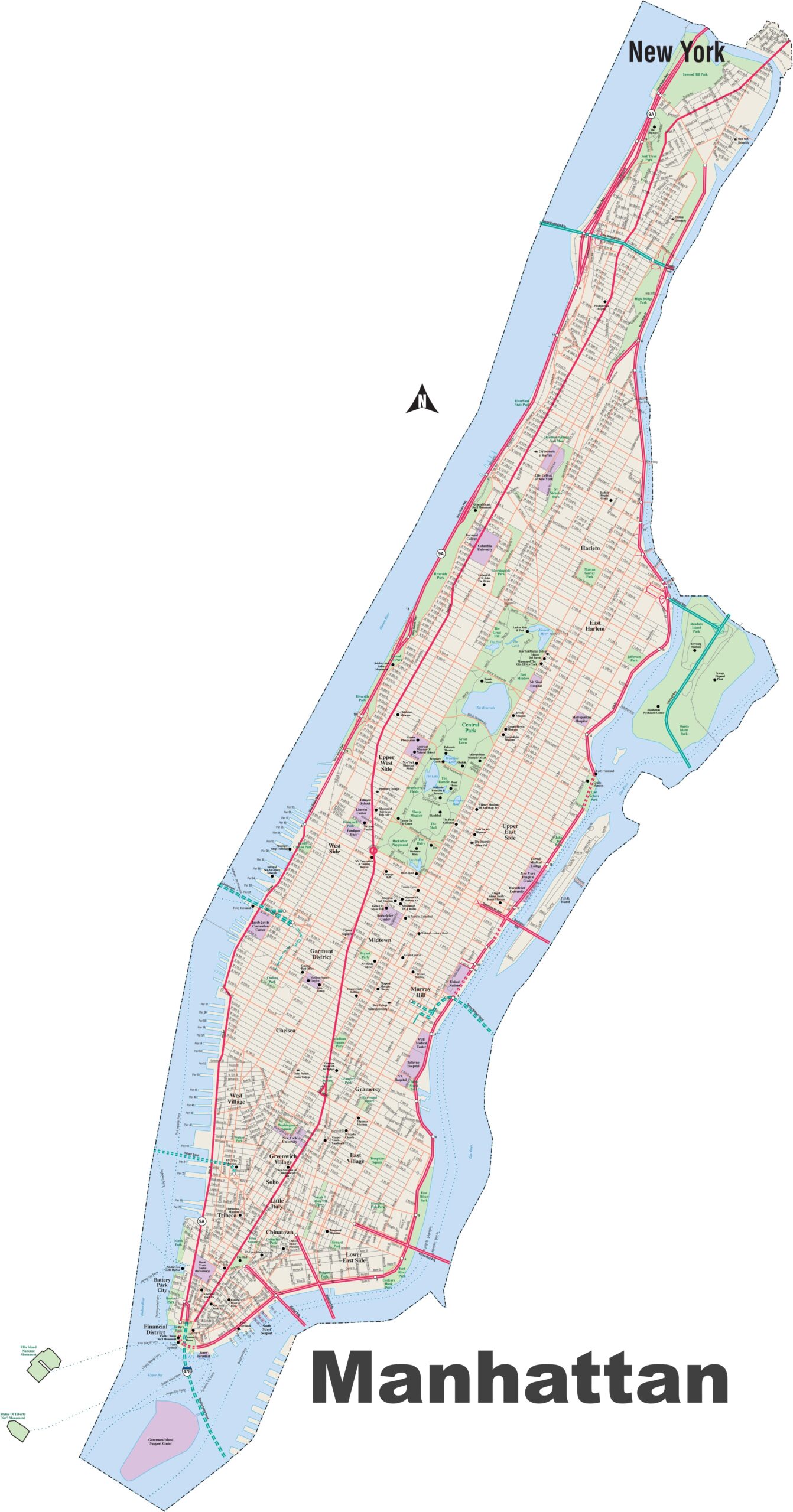
Manhattan Map Description: Unraveling a Urban Mosaic
The Manhattan Map details the island’s elongated shape, stretching 13.4 miles from the Battery to Inwood, framed by the Hudson River to the west and the East River to the east. The map highlights a grid of streets, with major avenues like Broadway, Fifth Avenue, and Lexington Avenue anchoring the layout. Green spaces, including Central Park, Riverside Park, and Fort Tryon Park, punctuate the urban expanse, offering natural retreats. Red lines mark key roadways like the FDR Drive and West Side Highway, while purple outlines define the borough’s boundaries. The map provides a clear overview of Manhattan’s diverse neighborhoods, from the Financial District to Harlem, set against a backdrop of blue waterways.
Purpose of the Map: Enhancing Exploration and Daily Navigation
This map serves as an essential tool for the 1.6 million residents and countless visitors of Manhattan. Tourists use it to locate iconic sites like Times Square or the Empire State Building, planning visits to museums and parks. Locals rely on it to navigate to work, shops, or transit hubs like Penn Station. City officials and urban planners leverage its layout to manage infrastructure, plan events, and promote tourism. Whether you’re strolling through Central Park, commuting downtown, or exploring uptown, this map ensures a rich and informed experience.
Visitor Navigation and Discovery
For visitors, the map directs them to cultural landmarks, such as Central Park or the Metropolitan Museum of Art, with clear markers for parks and major streets. It supports weekend adventures to the Upper West Side or Lower East Side, offering route options and neighborhood highlights, making travel accessible and enjoyable.
Community and Urban Planning Support
Beyond tourism, the map supports urban planning by mapping Manhattan’s street grid and parklands, aiding in traffic management and development projects. The update reflects ongoing enhancements, such as expanded green spaces and improved accessibility, ensuring the borough meets the needs of its diverse population and visitors.
Interesting Facts: Uncovering Manhattan’s Rich Legacy
- Urban Density: With 1.6 million residents, Manhattan boasts a population density of 70,000 per square mile, the highest in the USA.
- Historical Roots: First settled by the Dutch in 1624 as New Amsterdam, it became Manhattan after British control in 1664.
- Park Paradise: Central Park, opened in 1858, spans 843 acres and attracts over 42 million visitors annually.
- Skyline Icon: Home to over 5,000 buildings above 12 stories, including the Empire State Building, completed in 1931.
- Transit Lifeline: Served by 36 subway lines and numerous bus routes, it’s a global leader in public transportation.
The Manhattan Map invites you to explore a borough where history and modernity thrive. Grab this guide, plan your visit, and wander through its iconic streets and green spaces. Ready to experience NYC’s soul? Manhattan awaits with open arms!
Discover more USA travel treasures with our expert tips—your next urban adventure starts here!